Introduction: Why Refrigeration is Critical in Data Centers
Modern data centers act as the heart of global digital infrastructure, processing billions of requests per second.Each processor generates intense heat during operation, and uncontrolled accumulation can reduce equipment life by up to 50% and cause catastrophic failures.
Efficient cooling is not just a matter of comfort, but it is essential to maintain service availability. A single thermal failure can knock down entire servers, causing millions of dollars in losses.
Thermal Challenge: Power Density and Heat Dissipation
A typical data center concentrates hundreds or thousands of servers in reduced spaces. A high-performance server can generate between 500 to 1,500 watts of heat, while an entire room can reach densities of 10 to 20 kilowatts per square meter.
Modern processors like Intel Xeon and AMD EPYC need to operate between 60°C and 80°C to maintain maximum performance.Overcoming 90°C activates throttling mechanisms, reducing processor speed and impacting the entire data center throughput.In extreme cases, above 100°C, automatic shutdowns occur for protection.
Improper dissipation also drives up operating costs.Each 5°C increase in ambient temperature increases cooling power consumption by approximately 10%, creating a vicious cycle that affects the profit margin of providers.
Traditional Air Cooling System (CRAC/CRAH)
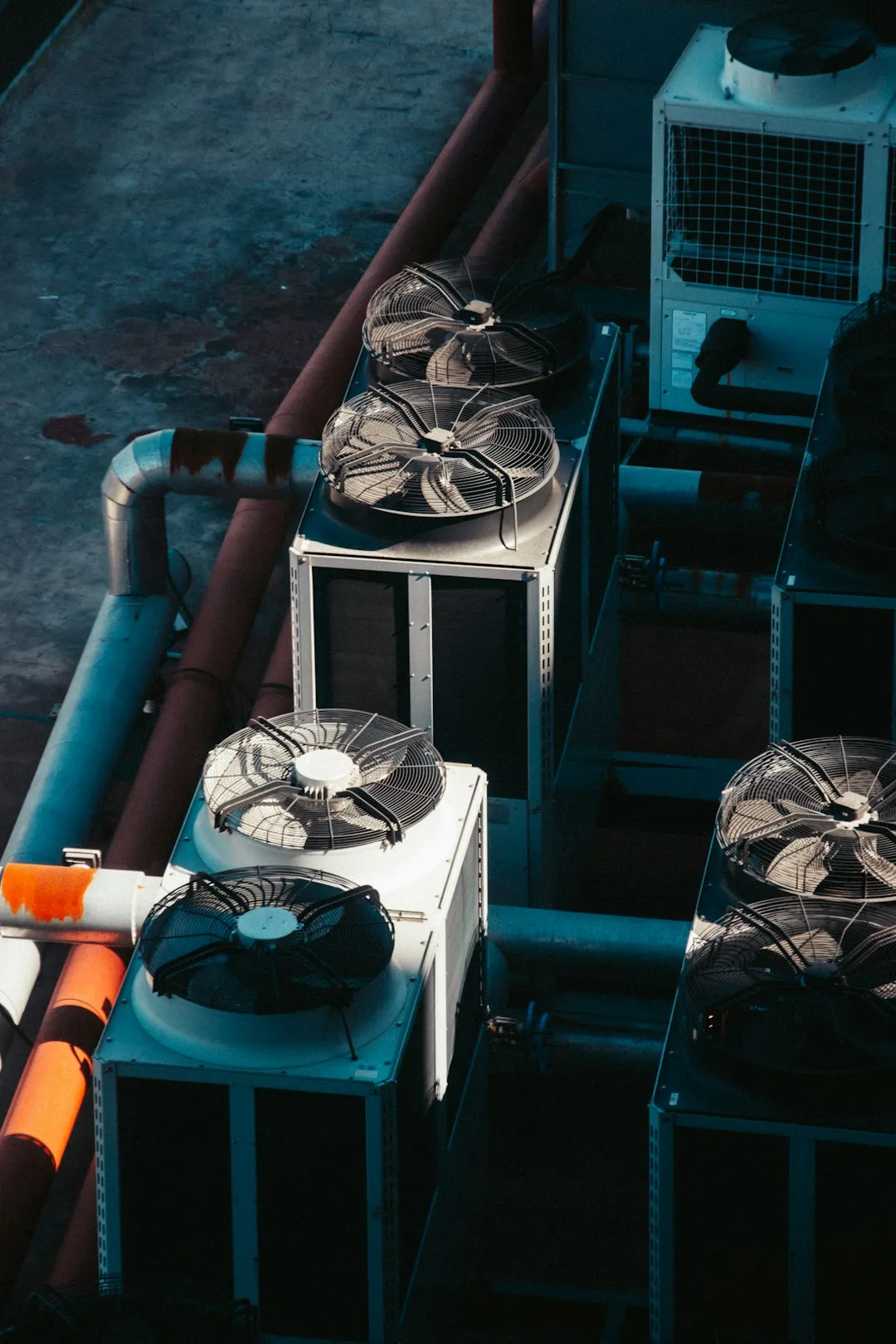
CRAC (Computer Room Air Conditioning) e CRAH (Computer Room Air Handler) they work by creating a physical separation between hot and cold air currents, using settings such as hot aisle/cold aisle.
In the hot aisle/cold aisle structure, servers are arranged in alternating rows: a row with fronts facing a cold aisle (where cooled air circulates), and the next row with rear to a hot aisle (where heated air is captured). This minimizes air mixing and maximizes efficiency.
However, these systems have limitations.They consume a lot of energy 40% to 50% of the total energy of the data center & have difficulty dealing with ultra-high processor densities.
Liquid Cooling: The High Performance Solution
Liquid cooling instead of air, fluids (distilled water, specialized coolants, or low viscosity oils) circulate directly through tubes attached to the processors, absorbing heat much more efficiently.
There are two main approaches:
- Direct liquid cooling (Direct-to-Chip): Pipes connect directly to the processor, remotional heat at the point of origin.Reduces temperature by 10 to 20°C compared to air.
- Immersion: Whole servers are submerged in non-conductive fluid of electricity. Allows densities up to 50 kilowatts per square meter 3 to 5 times higher than traditional air.
Giants such as Meta, Google and Microsoft already implement immersion cooling in data center portfolios.The fluid absorbs all the heat from the hardware 'processor, GPU, memory, power supply & 'DO eliminating the need for internal fans and reducing energy consumption by up to 40%.
Advanced Thermal Dissipation Techniques
Heat pipes hotel e thermal spreaders a heat pipe is a sealed copper tube containing special fluid that changes between liquid phase and vapor, transporting heat extremely efficiently.
The copper and aluminum spreaders they increase the contact area of the processor, distributing heat in larger volume. Modern processors use high-efficiency conductive thermal pastes (with silver or graphene particles) applied between the chip and the spreader, ensuring maximum heat transfer.
Refrigeration free cooling it is another strategy: during periods of low ambient temperature (nights, winters), natural outdoor air feeds the radiators without the use of air conditioning compressors. Large data centers in cold regions (Finland, Iceland, Norway) take advantage of this to reduce costs by 60% to 80% for much of the year.
Real-Time Monitoring and Automation
Modern thermal management systems use hundreds of sensors scattered throughout each server and corridor. These sensors measure temperature, relative humidity and airflow continuously, sending data to AI platforms that dynamically adjust the speed of fans and compressors.
Machine learning algorithms predict load spikes and increase cooling capacity before critical temperature is reached. This prevents processor throttling and ensures constant operation at maximum performance.Some data centers also use hot spot detection hotel: if a specific area reaches 85°C, the system automatically redistributes processing loads to nearby colder servers.
Redundancy is mandatory 'failure of a cooling system can not bring down the data center. Therefore, multiple CRAC units, cooling towers and backup systems with generators work in parallel. Any unit that fails is automatically deactivated, and its load is distributed between operating units.
Efficiency Metrics: PUE and Cost Savings
PUE (Power Usage Effectiveness) it is the standard metric: ratio between total data center power consumption and IT equipment consumption. An ideal PUE is 1.0 (each joule goes to IT). In practice, modern data centers reach 1.2 to 1.4 μ, meaning that for every 100 watts on servers, 20 to 40 watts goes to cooling, lighting and distribution.
Google reduces PUE to 1.08 in its most efficient data centers, using a combination of liquid cooling, free cooling and AI. Meta reports PUE from 1.1 to 1.13 in recent installations.Each 0.1 reduction in PUE saves millions of dollars annually in electricity for operators running hundreds of megawatts.
Energy cost accounts for 30% to 40% of a data center's operating expenses. Optimizing cooling is therefore the biggest lever for profitability. Investing in advanced systems costs more initially (immersion cooling retrofit can cost $2-5 million per installation), but return in 3-5 years is guaranteed.